
Triple roughness + free calcium ions
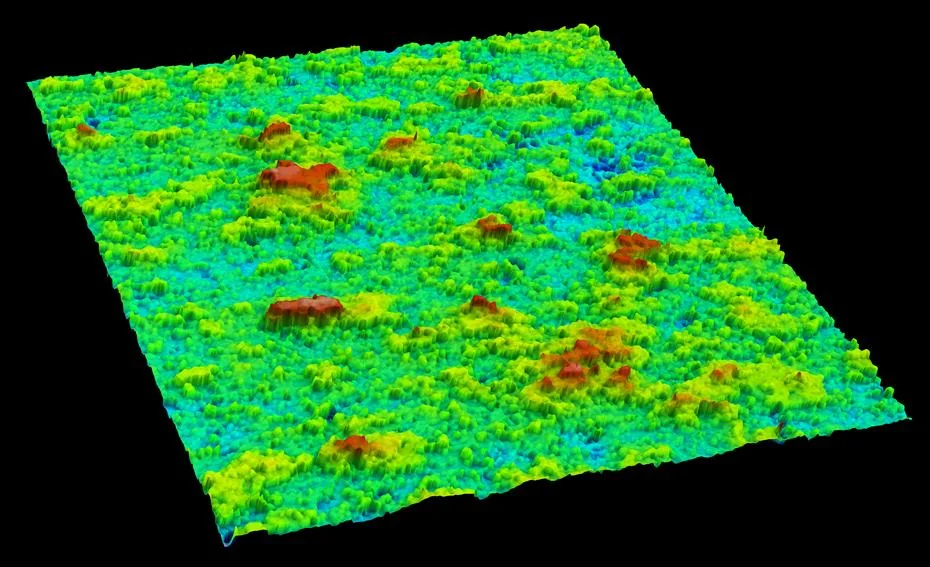
The surface of BTI implants consists of a chemical modification with calcium ions over a triple roughness. Roughness is engineered by zone (neck, threads, valleys) and the chemistry is engineered for the first minutes after insertion.
UnicCa® is not a calcium-titanate nor a calcium-phosphate / hydroxyapatite coating. The calcium ions sit on the titanium oxide and are released into the blood; nothing can delaminate.
BTI UnicCa® is the first implant system on the market awarded the CleanImplant Foundation Trusted Quality Mark (2017 – 2026), a guarantee of the highest quality of its materials and surface, verified on production implants.
Each zone of the implant meets a different tissue
The topography changes along the implant so each area suits the tissue and the biomechanical need it meets.
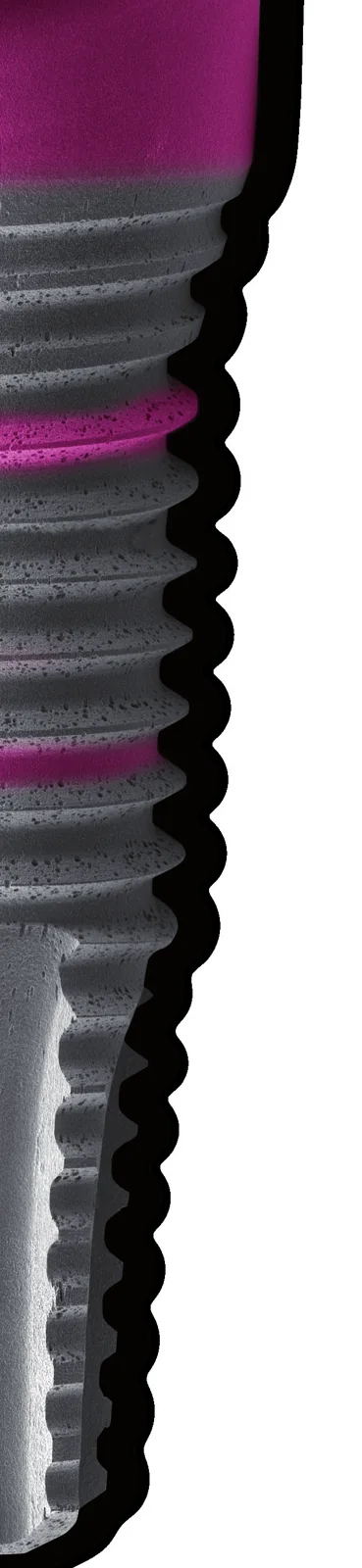
A BTI neck is neither machine-polished nor shot-blasted-and-acid-washed. Its reduced roughness enhances marginal tissue retention and resists bacterial adhesion, which protects the marginal bone and the gingiva.
Allows bone anchorage outside the threads: more mechanical anchoring in the bone, better primary stability from the first day.
Guides bone growth between the threads while maintaining the implant's mechanical properties.
Healing starts the moment the implant is fitted
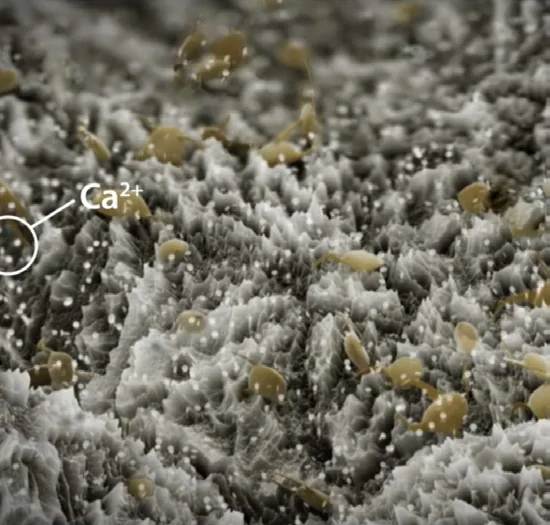
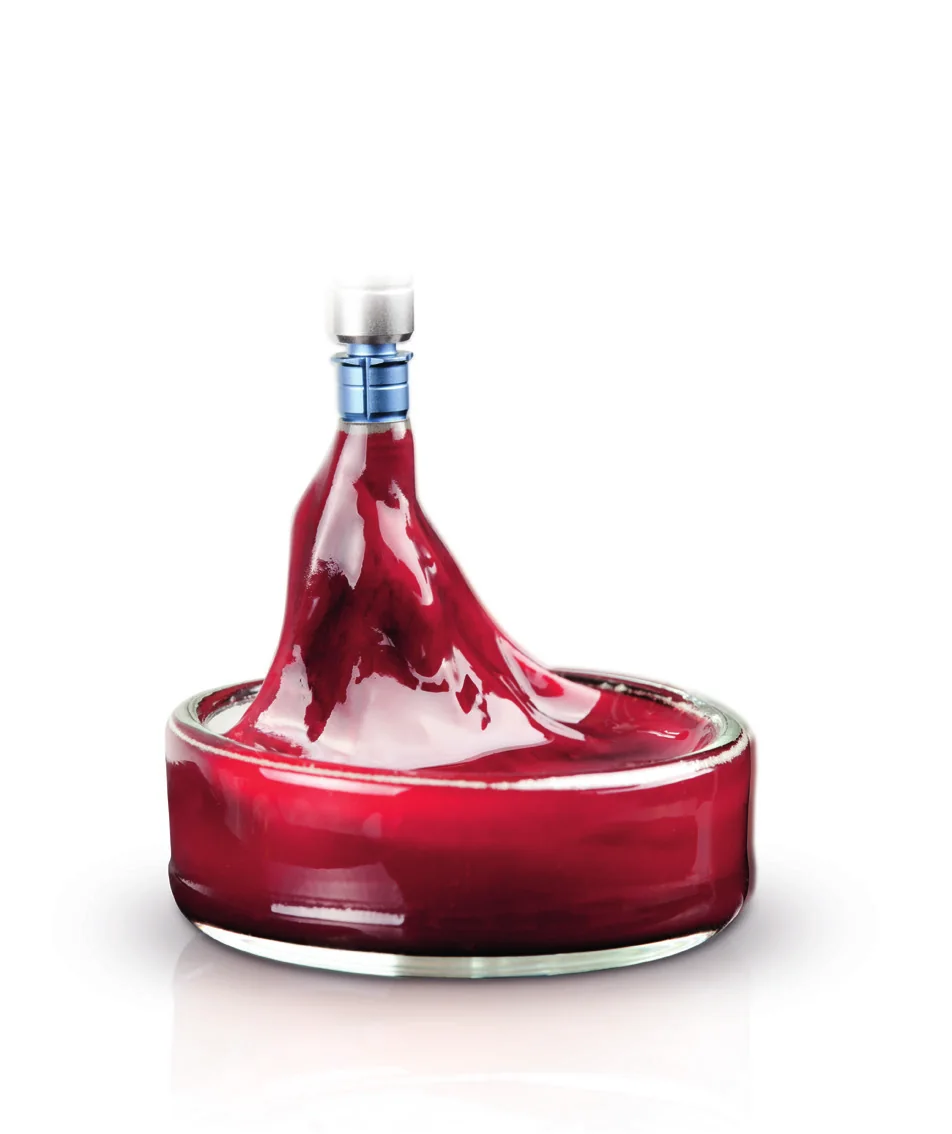
Ionised calcium is a necessary co-factor in the coagulation cascade and helps platelet adhesion and activation on the titanium surface.
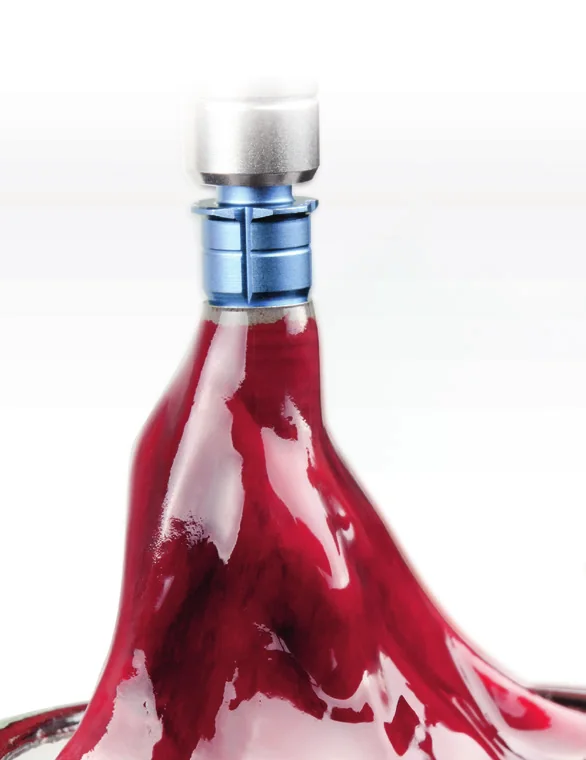
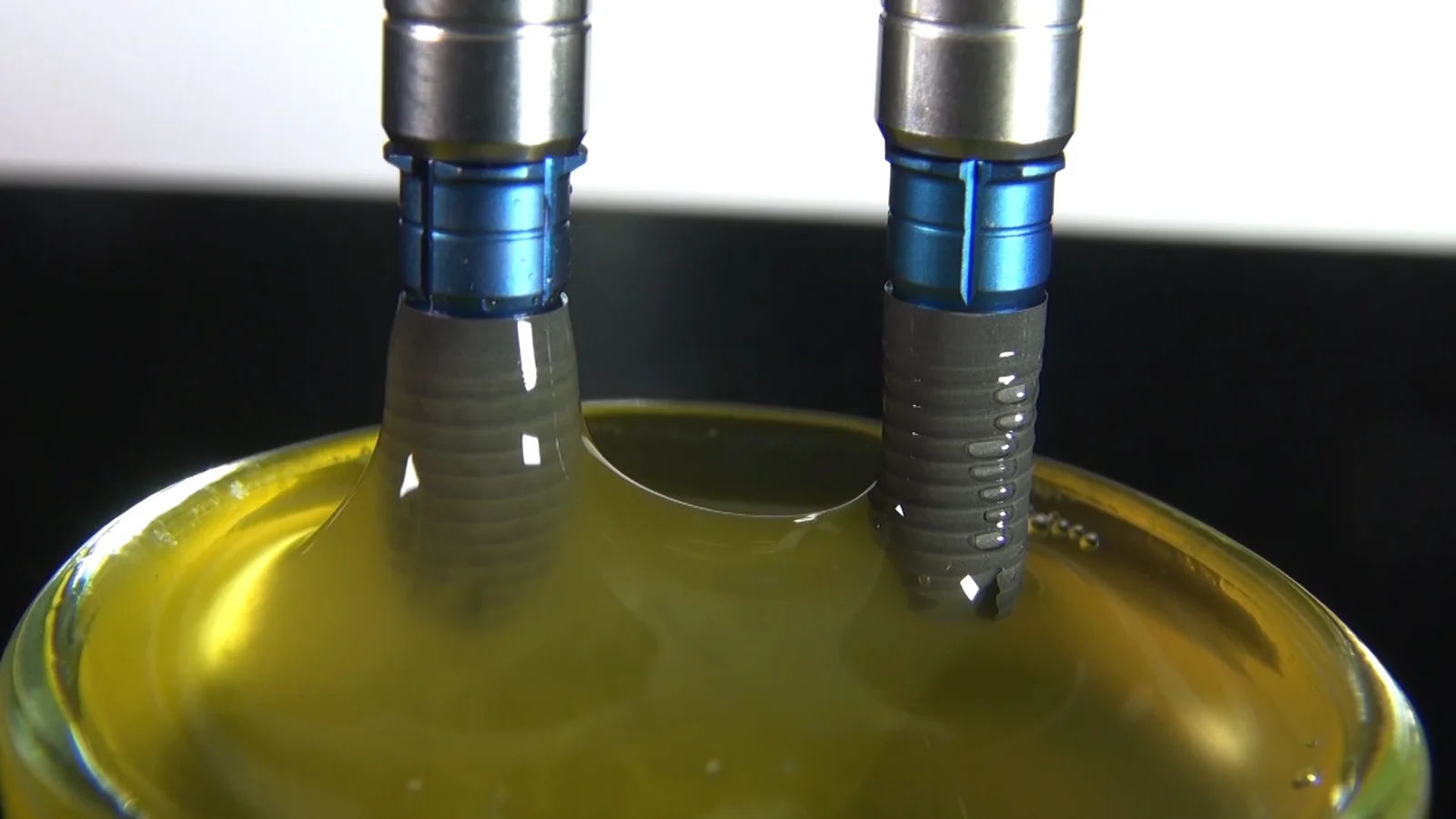
The release of calcium from the UnicCa® surface happens as soon as the implant is fitted. Fifteen minutes later a stable clot covers the implant.
The surface is electropositive, clean and super-hydrophilic, so blood proteins and platelets bind immediately and the regenerative process begins without delay.
Ionised calcium accelerates osseointegration
Calcium is essential for bone regeneration: it drives organic-matrix mineralisation and signals bone cells through the calcium-sensing receptor. The animal studies below measured what that means at the implant.
In dog-maxilla models, sequential-healing studies compared UnicCa® with a calcium-phosphate-modified surface and with a hydrophilic SLA-type surface and reported earlier bone-to-implant contact on UnicCa® (Favero 2015, two studies).
Bone-to-implant contact in the gap was significantly higher on UnicCa® than on the same surface without calcium, and higher still when UnicCa® was combined with PRGF-Endoret® at 8 weeks (Anitua 2015).
The percentage of mineralised bone in contact with the surface stayed higher on UnicCa® in the later healing phases of the same dog models, i.e. the effect is not limited to the first weeks.
The neck that resists bacteria
Compared with a machined neck and with a shot-blasted + acid-washed neck, the BTI neck showed significantly lower adhesion of Aggregatibacter actinomycetemcomitans and Streptococcus sanguinis after one hour and after 24 hours (Anitua, Biomaterials 2016).
Under a flow of human saliva from healthy donors, biofilm of S. mutans and A. actinomycetemcomitans grew less over days on UnicCa® combined with Endoret® than on machined or sand-blasted + acid surfaces.
C. albicans, A. actinomycetemcomitans, S. sanguinis and S. mutans all adhered less to the BTI neck than to the rougher alternatives (Pachá 2016, statistically significant).
Marginal bone and gingival tissue are maintained around the reduced-roughness neck, which is how BTI states UnicCa® reduces the risk of peri-implantitis.
The CleanImplant Foundation analyses production implants for particulate and organic contamination. BTI UnicCa® holds the Trusted Quality Mark for 2017 – 2026, renewed on each audit. Integra provides the certificate and the CE declarations for your practice records.
Sources
- Anitua E, Prado R, Orive G, Tejero R. Effects of calcium-modified titanium implant surfaces on platelet activation, clot formation, and osseointegration. J Biomed Mater Res A 2015;103:969-80.
- Anitua E, Tejero R, Pachá MA, Zalduendo MM, Troya M, González M. Balancing infection and tissue-integration on calcium-ion modified titanium implant surfaces. Biomaterials 2016.
- Pachá MA, Anitua E, Tejero R, et al. Implant surface balances in bacterial adhesion. J Biomed Mater Res A 2016.
- Anitua E, Tejero R, Pacha-Olivenza MA, et al. Balancing microbial and mammalian cell functions on calcium ion-modified implant surfaces. J Biomed Mater Res B 2017.
- Favero R, Botticelli D, et al. Sequential healing at calcium- versus calcium phosphate-modified titanium implant surfaces: an experimental study in dogs. Clin Implant Dent Relat Res 2015.
- Favero V, Lang NP, et al. Sequential healing events of osseointegration at UnicCa® and SLActive® implant surfaces: an experimental study in the dog. Clin Oral Implants Res 2015.
- Tejero R, et al. Time-of-flight secondary ion mass spectrometry with principal component analysis of titania–blood plasma interfaces. Langmuir 2013;29:902-912.
- Weisel JW. Fibrinogen and fibrin. Adv Protein Chem 1984;70:247-299. · Gorbet MB, Sefton MV. Biomaterial-associated thrombosis. Biomaterials 2004;25:5681-5703. · Park JY, et al. Platelet interactions with titanium. Biomaterials 2001;22:2671-2682.
- Habibovic P, Barralet JE. Bioinorganics and biomaterials: bone repair. Acta Biomater 2011;7:3013-3026. · Marie PJ. The calcium-sensing receptor in bone cells. Bone 2010;46:571-576.
Content adapted from BTI CAT112 UnicCa® Surface (12/2024) and BTI's UnicCa® scientific presentation. UnicCa®, Endoret® and BTI® are trademarks of BTI Biotechnology Institute S.L.